Turning Big Ideas into Realistic Plans
I help teams cut through the noise and figure out what to digitize now, what can wait, and what changes staff need to make so the tech doesn’t collect dust.
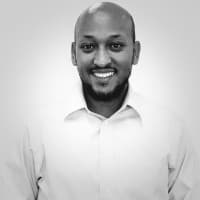
I created this space to give you a better idea of who I am, my experiences, my skills, and a few key pieces of work I want to highlight for your reference. A résumé can only list job descriptions, but I hope this site gives you a clear picture of how I think and operate on the ground.
I am a digital transformation, digital health, and geospatial technology leader with over 20 years of experience working alongside governments, global donors, tech entrepreneurs, and local communities across Africa and the United States. At my core, my focus is simple: I help turn complex technology investments into reliable, scalable systems that people can actually use, govern, and sustain long after the funding stops.
My approach was shaped by building systems from the ground up. Founding eAdrasha in Addis Ababa — a location start-up built to map the unmapped — taught me that technology only succeeds when it respects the daily realities of the people using it.
I brought that same human-centered discipline to USAID/Ethiopia as Senior Digital Health Advisor, serving as the senior digital health lead for a $63 million national health portfolio. Across rural health posts, ministry offices, and international donor tables, my job was to build alignment, connecting health data, electronic medical records, and supply chains into a national system the government could truly own. More recently I have advised public utilities and major infrastructure programs on enterprise GIS, systems integration, and digital transformation strategy.
Based in Addis Ababa with U.S. citizenship, I am drawn to senior Africa-focused leadership roles where strategy, technology, and genuine human impact come together. Take a look around, and if you are building systems that matter, I would love to connect.
What I Do
I get brought in when a digital project gets stuck between big strategic goals and the practical realities of making it work.
Usually, the hard part isn’t picking the software. It’s connecting the human pieces: helping leaders figure out what actually needs to be built, how it will work on the ground, what it will take to roll out, and how the local team will keep it running after the experts leave.
Where I usually lend a hand:
I help teams cut through the noise and figure out what to digitize now, what can wait, and what changes staff need to make so the tech doesn’t collect dust.
Utilities and agencies usually have the data already; it is just trapped in separate systems. I help connect asset records, customer information, ERP, SCADA, and field tools so the left hand knows what the right hand is doing.
Most leaders don’t need more reports. They need quick answers to key management questions. I help clean up fragmented data and build simple dashboards that help people make practical decisions.
I step in to support teams managing big tech investments and vendor contracts. I review budgets, sharpen requirements, catch risks early, and translate complex technical headaches into clear choices for leadership.
A new system rarely fails because the software breaks; it fails because nobody was trained or supported to run it. I help set up clear roles, daily routines, and local training so the system belongs to the institution, not outside consultants.
When a project involves government officials, donors, tech vendors, and field workers, everyone speaks a different language. I help bridge those gaps so everyone can agree on what to do next.
My approach comes from being able to talk to leadership about strategy and budgets in the morning, and then sit down with software developers or GIS specialists in the afternoon to figure out why a system isn’t working on the ground.
Having managed donor-funded projects, advised public utilities, and started my own mapping company, I’ve seen where these projects tend to get stuck.
It helps me ask the simple, practical questions that save teams time and resources:
At the end of the day, I don’t just help you pick or build technology; I work alongside your team to make sure your organization can actually use it.
Geospatial Practice
Two decades of geospatial work, from writing the automation scripts myself to advising utilities and ministries on the platforms their operations run on.
Deploying and running geospatial platforms as production infrastructure — server, portal, and enterprise geodatabases that field crews and control rooms depend on daily.
DC Water and Sewer Authority; Prince George’s County; Ethiopian Electric Utility
Building browser-based mapping products and the addressing data underneath them, including in places where no reliable base data existed to begin with.
eAdrasha — 50,000 locations mapped; open Addis Ababa geodata
Replacing repetitive analytical and data-management work with Python, SQL, and ETL pipelines, so teams spend their time on judgment instead of file handling.
PEPFAR analytics across eight USAID Missions; ArcPy utility library
Using satellite imagery and Google Earth Engine to monitor conditions that are impractical to observe continuously from the ground.
Gefersa Reservoir water-quality monitoring, Addis Ababa
Desktop & Enterprise GIS
Programming & Automation
Spatial Data & Web
Earth Observation
Health & M&E Systems
Institutional Experience
Advising on digital health, data, GIS, and national technology programs.
Helping modernize enterprise GIS and utility information systems.
Supporting digital-health data, interoperability, and spatial analytics.
Developing geospatial analysis and decision-support products for public-sector work.
Supporting infrastructure data, field workflows, and utility operations.
Working on countywide GIS, data governance, emergency response, and public applications.
Selected Work
The work below shows the range of my practice: national digital transformation, utility modernization, and building a technology company around a practical urban problem.
Challenge / Achievement
As Senior Digital Health Advisor at USAID/Ethiopia, I served as the senior adviser and senior digital health lead for USAID’s approximately $63 million Digital Health Activity, one of the country’s major donor-supported investments in national digital-health systems. My responsibility was considerably broader than providing technical advice on individual software platforms.
Role
Senior Digital Health Advisor, USAID/Ethiopia
Key Business & Technical Impact
Challenge / Achievement
I supported the Ethiopian Electric Utility (EEU) company to modernize their data management for their network infrastructure. They had a major data fragmentation as well as data management challenges. For a large electric utility like EEU, GIS becomes valuable when it moves beyond mapping and becomes part of the operational information infrastructure connecting assets, customers, networks, field teams, enterprise systems, and executive decision-making.
Role
Senior GIS Engineer / Public-Sector & Utility Advisor
Key Business & Technical Impact
Challenge / Achievement
Before my work became centered on national digital transformation, I founded eAdrasha to address the practical challenge of finding businesses, navigating informal addressing systems, and using reliable location information across Addis Ababa.
Role
Founder & Chief Executive Officer
Key Business & Technical Impact
Alongside the advisory work, I build systems myself:
Point of View
My perspective comes from working on both sides of the problem. I can sit with senior leaders discussing policy, governance, financing, ownership, and implementation risk, then work with technical teams on architecture, APIs, GIS, interoperability, databases, and analytical workflows.
That combination helps turn ambitious transformation agendas into systems that people can use, govern, and sustain.
More about TewodrosLet's Work Together
I work with governments, development organizations, technology companies, investors, and institutions tackling complex digital, data, geospatial, and public-sector modernization challenges.